
Key takeaways
- The apparent bargain of cheap liquidation pallets is frequently wiped out by scrap rates, sorting labor, and freight accessorial charges.
- Selling on major marketplace platforms requires traceable commercial invoices from authorized distributors, not retail receipts.
- State resale certificates are mandatory to purchase inventory exempt from sales tax and gain access to true wholesale pricing tiers.
- Always model landed cost per unit inclusive of pallet LTL liftgate fees, fuel surcharges, and return allowances before committing capital.
Whether operating an e-commerce storefront, an Amazon FBA operation, a physical brick-and-mortar boutique, or an independent liquidation warehouse, the profitability of any reselling business is determined at the moment of purchase. Buying the wrong inventory—or purchasing from unvetted suppliers with zero chain-of-custody documentation—leads to counterfeit disputes, blocked marketplace accounts, and unsellable dead stock.
To build a sustainable merchandising pipeline, resellers must understand the commercial trade-offs between the four primary wholesale supply channels, navigate legal resale documentation, and audit the hidden logistics costs of pallet freight.
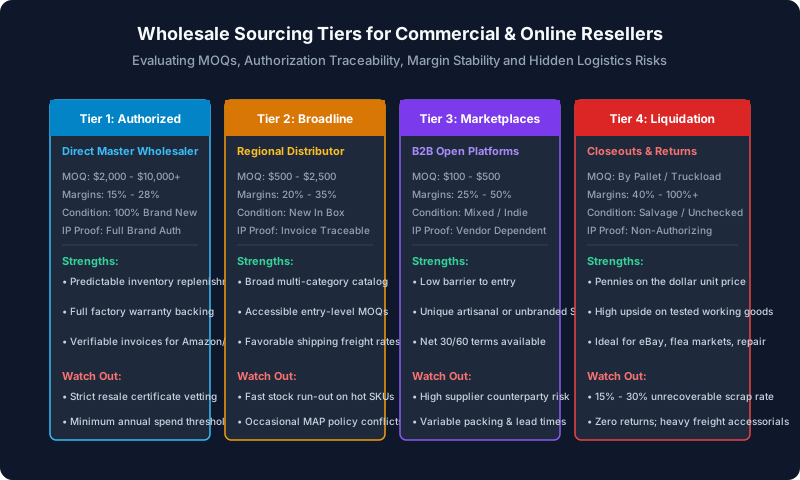
1. Comparing the Four Wholesale Supply Channels
Resellers source inventory across four distinct commercial supply tiers, each with differing capital requirements and risk profiles:
Tier 1: Authorized Brand Master Distributors
- Profile: Direct corporate partners representing global manufacturers across defined geographic territories.
- Entry Requirements: Established business entity, formal credit application, and high Minimum Order Quantities (MOQs, typically $2,500 to $10,000+ per order).
- Reseller Advantages: 100% brand-new, factory-sealed inventory backed by full manufacturer warranties. Invoices provide incontrovertible authenticity proof during brand IP audits.
- Reseller Drawbacks: Lower gross profit margins (15% to 25%), strict enforcement of Minimum Advertised Price (MAP) policies, and geographic territory restrictions.
Tier 2: Broadline Regional Wholesalers & Jobbers
- Profile: Regional warehouse stockists distributing thousands of SKUs across general merchandise, hardware, health and beauty, or consumer packaged goods.
- Entry Requirements: Valid state resale certificate; moderate MOQs ($500 to $1,500).
- Reseller Advantages: Ability to mix and match dozens of brands onto a single pallet; reliable catalog replenishment; regional delivery within 48 to 72 hours.
- Reseller Drawbacks: Middleman margins reduce profit spreads compared to factory-direct volume purchasing.
Tier 3: B2B Open Wholesale Marketplaces
- Profile: Digital platforms connecting independent brands, artisans, and overseas factories with boutique retailers (e.g., Faire, Tundra, Wholesale Central).
- Entry Requirements: Low ($100 to $300 minimum opening orders), often accepting credit card payments or offering Net-60 trade terms for verified storefronts.
- Reseller Advantages: Excellent for finding unique, high-margin boutique items, specialty giftware, and private-label merchandise with 40% to 60% gross retail margins.
- Reseller Drawbacks: Supplier counterparty risk is high; packaging quality varies; intellectual property protections and brand authorization are not guaranteed.
Tier 4: Liquidation Brokers & Overstock Auctions
- Profile: Commercial liquidators auctioning customer returns, shelf pulls, overstock surplus, and freight-damaged pallets from major retail department stores.
- Entry Requirements: Cash-on-delivery or wire transfer; sold by the pallet or full truckload (FTL) on a strictly “As-Is, Where-Is” basis with zero return privileges.
- Reseller Advantages: Extreme purchase discounts (typically 10% to 25% of retail value); high profit potential on secondary channels (eBay, Poshmark, Mercari, local flea markets).
- Reseller Drawbacks: Unpredictable scrap rates: between 15% and 30% of items on customer-return pallets are broken, missing essential parts, or complete salvage. Requires substantial labor to inspect, test, clean, and re-box merchandise.
2. The “Cheap Pallet” Fallacy: True Landed Cost Modeling
Novice resellers frequently purchase “cheap” liquidation pallets advertised at $800 for $5,000 in nominal retail value, only to discover they lose money after freight and scrap deductions. Professional resellers calculate the True Landed Cost per Sellable Unit:
True Landed Cost = (Pallet Invoice Price + LTL Freight + Accessorials + Testing/Cleaning Labor)
                   / (Total Manifest Units x (1 - Defect Scrap Rate))
Common Hidden Freight Accessorials:
- Liftgate Service: $75 to $150 (charged by LTL freight carriers if you do not have a commercial loading dock or forklift).
- Residential Delivery Fee: $75 to $125 (triggered if the delivery address is classified as residential or non-commercial zone).
- Delivery Appointment / Notification Fee: $25 to $50.
- Detention Charges: Billed if your unloading crew takes longer than 30 minutes to clear the carrier’s trailer.
A $700 pallet incurring $350 in freight and accessorials costs $1,050 delivered. If 25% of the 100 units on the pallet are unsellable broken salvage, your real acquisition cost is $14.00 per sellable unit, not the $7.00 advertised on the manifest.
3. Essential Legal Documentation: The Resale Certificate
In the United States and Canada, legitimate wholesale suppliers will not sell to the general public. Gaining access to real wholesale pricing requires establishing a legal resale foundation:
- State Sales Tax Resale Certificate: Issued by your state Department of Revenue. This certificate certifies that you are purchasing goods exclusively for resale, legally exempting the transaction from state sales tax at the wholesale level.
- Sales Tax Nexus Compliance: You are responsible for collecting sales tax when the merchandise is sold to the end consumer, unless sold through an e-commerce marketplace (such as Amazon, eBay, or Etsy) operating under Marketplace Facilitator legislation.
- Resale Certificate Misuse: Using a resale certificate to purchase personal goods tax-free is a state tax fraud violation carrying severe civil penalties and revocation of business licenses.
4. Supplier Due Diligence Checklist
Before wiring funds to any new wholesale vendor:
- Verify the supplier’s physical warehouse address using satellite mapping and commercial property records.
- Confirm the supplier possesses an active telephone landline answered during standard commercial business hours.
- Audit trade credit references through commercial reporting agencies (Dun & Bradstreet, Experian Business).
- Review the supplier’s formal Return Merchandise Authorization (RMA) terms: who pays return freight on factory-defective goods?
- Place an initial test order using a commercial credit card or verified escrow before transitioning to bank wire transfers.
For the broader topic and related guides, see Supplier Research.