
Key takeaways
- Read cosmetic condition, functionality and battery health as separate commitments.
- Meeting the total minimum does not settle which models, capacities or grades you will receive.
- A manifest lists inventory; the lot's testing disclosure establishes what is promised about operation.
- Record the event that starts each claim clock and the action required before it expires.
What should a wholesale phone offer actually promise?
A wholesale cell phone offer should identify the lot, define its condition, allocate the units you are buying and explain the remedy if delivery falls outside those terms. Start with the seller’s written description of the exact stock. A cosmetic grade, a total quantity and a return-policy headline leave important decisions open: which phones must work, what battery condition is included, whether the mix can change and which problems qualify for a claim. Use the checks below to turn those separate promises into one order you can verify on arrival.
For the broader account, quotation and payment sequence, use the wholesale buying guide. If you are still choosing a supply channel, the mobile phone wholesalers guide covers supplier types and device-verification questions. Here, the task is to check the terms on an offer you are considering.
How do you compare A, B and C grades across sellers?
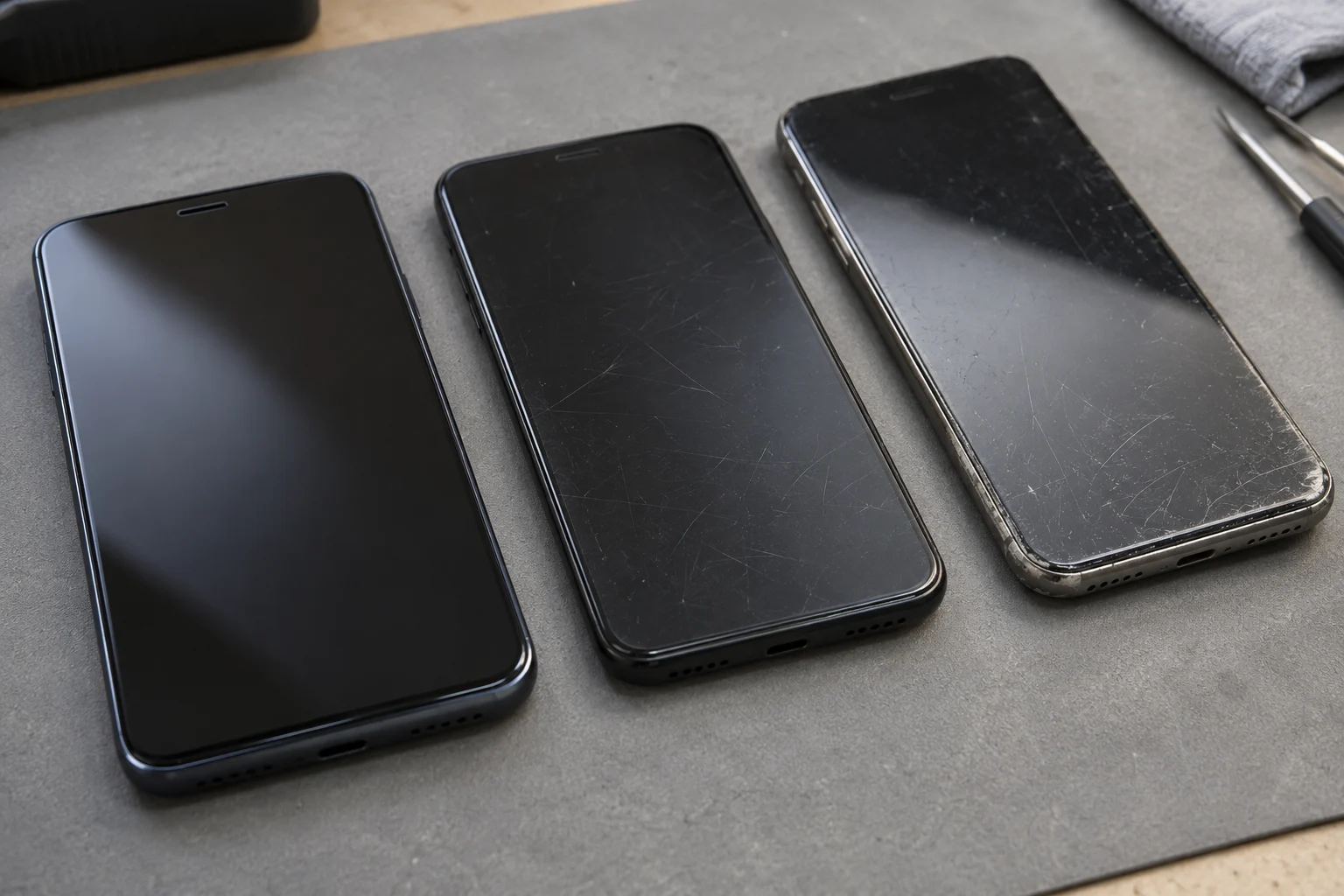
Read the seller’s grade definition alongside its functional promise. Keep screen wear, housing damage, working condition and battery health on separate lines so that an attractive cosmetic label cannot stand in for the other commitments.
ICS Wireless’s Wholesale Phone Grading Scale describes its A, B and C stock as tested and fully functional, with increasing cosmetic wear. It places parts-and-repair stock in Grade D. Reagan Wireless’s Wholesale Cell Phone Buying FAQ, by contrast, describes Grade D as passing its functional test while permitting exterior damage, including small cracks. The same letter can therefore lead to a different acceptance decision.
Use a comparison like this for each quotation. Copy the seller’s wording into your order record rather than assigning your own meaning to its grade.
| Offer field | What to capture | Why it changes acceptance |
|---|---|---|
| Grade definition | Seller’s label and the attached grading schedule | Establishes which description applies to this lot |
| Screen and housing | Permitted scratches, cracks, dents and display defects | Separates acceptable wear from a mismatch |
| Functionality | Tests included, promised working state and exceptions | Identifies whether faults are expected or outside the offer |
| Battery | Health floor, coverage across units and exclusions | Makes the battery commitment independently checkable |
| Remedy | Eligible faults, reporting steps and resolution | Shows which deviations can actually be claimed |
If the quotation says tested but the lot description says untested, have the seller reconcile the descriptions in the accepted order. The receiving team needs one clear description to work against. Save that version with the grade schedule so later changes to a website cannot obscure what was agreed.
What battery terms belong on a used iPhone wholesale order?
Put the battery-health floor and its coverage next to the grade. For a used iPhone wholesale order, establish whether the commitment applies to every device, how the seller records the reading and what remedy applies to a unit below the agreed floor.
Reagan Wireless’s FAQ lists battery health of 90% or above for A+ and 80% or above for A, B and C. ICS Wireless’s grading policy says battery health is certified only when specifically ordered. These published terms illustrate why the battery line needs its own agreement even when both offers use familiar grade letters.
For the order you are comparing, record the covered models and grades, the promised threshold, any excluded units and the evidence required for a battery-related claim. If a mixed lot includes phones with different commitments, attach those commitments to the relevant manifest lines. A lot-wide average would answer a different question from a minimum that every unit must meet.
Also check whether a battery exception affects the return route. A cosmetic grade and a functional-only return policy may leave a battery complaint dependent on the separately agreed battery term. Resolve that relationship before treating the order as ready for resale.
Does the MOQ guarantee the model mix you want?
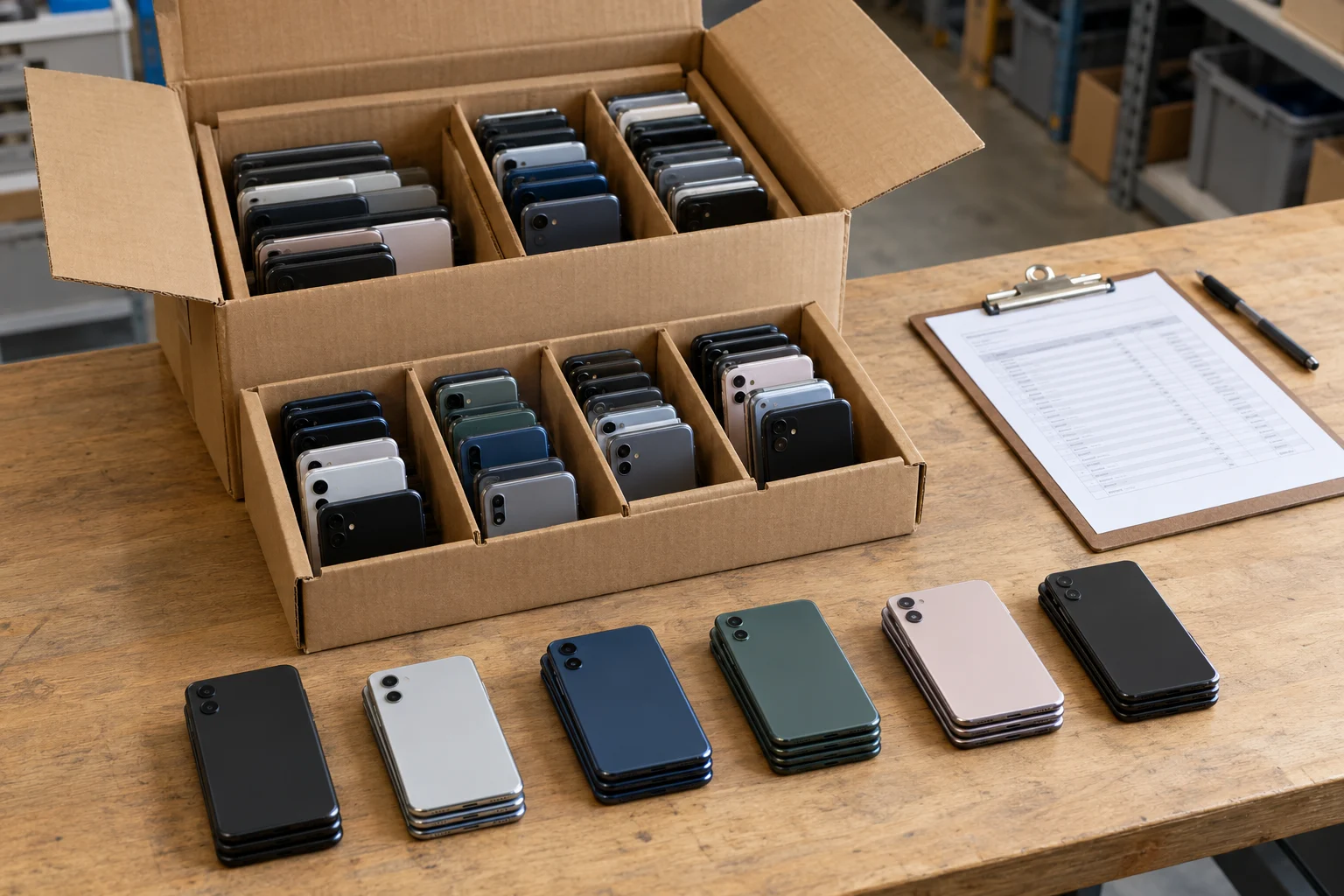
The minimum order quantity, or MOQ, establishes the purchase minimum. The allocation establishes what fills it. Record both: total units, any minimum per line, and the quantities assigned to each model, storage capacity and grade.
The published policies show different approaches. ICS Wireless’s FAQ states a 10-phone minimum. A1A Solutions’ Wholesale Phones Miami page states 30 units per order, with mixed brands and models counting toward it. Reagan Wireless confirms its minimum when quoting the requested models and grades. Compare the minimum attached to your offer; a mixed-order option still needs an agreed allocation.
Before accepting the mix, settle these points:
- Model and capacity counts: Specify the required quantities instead of relying on a representative product photo.
- Grade allocation: State whether each line has one grade or an assortment, and whether the split is exact or indicative.
- Color allocation: Specify a color requirement if it matters. ICS Wireless’s grading policy defaults to mixed colors unless a particular color is ordered.
- Substitutions: Agree whether the seller needs approval to replace a model, capacity, color or grade, and how a rejected substitution affects the order.
- Take-all wording: If it appears, identify the manifest version covered, whether every listed unit must be purchased and whether selection or substitutions are allowed.
When a minimum is the obstacle, check how order and line minimums differ to identify the constraint on your purchase. Keep that negotiation separate from permission to change the assortment: buying enough units does not settle which units the seller will ship.
How should you read cell phone liquidation pallets?
Read the manifest, stock origin, cosmetic condition and testing disclosure together. A manifest is an inventory list; a return-stock description identifies where goods came from. The functionality disclosure tells you what the seller promises about operation.
B-Stock Supply’s Auction Submission Guide treats inventory type, cosmetic condition and functionality as separate fields. Its functionality choices include Untested and Mixed/Other. Its Mostly Functional category describes a majority of working inventory while leaving the exact working ratio unguaranteed. A lot can therefore have a detailed manifest and still contain untested or nonworking phones.
For cell phone liquidation pallets, find the description that governs each portion of the lot. Identify tested working stock, untested units and disclosed repair or parts inventory before comparing the remedy. If the listing mixes conditions, check how that mix is represented in the manifest and in the overall lot description. The liquidation market guide explains the broader channel differences behind these offers.
Price and accept disclosed repair stock as repair stock. A nonworking phone in a lot sold with that condition does not by itself establish a mismatch with the offer. B-Stock Supply’s Buyer Protection Program excludes condition-related disputes for salvage orders. Read any as-is or take-all clause beside the eligibility rules, because an appealing return-policy headline cannot resolve those exclusions.
Which DOA and RMA deadlines should you record?
Record the triggering event and required action for each deadline. DOA means dead on arrival; an RMA is the seller’s return merchandise authorization. Reporting a fault, receiving authorization and getting the device back to the seller can be separate steps.
The following are policy-specific examples from ICS Wireless’s grading policy, Reagan Wireless’s FAQ and the B-Stock Supply Buyer Protection Program. Apply the terms attached to your accepted order.
| Policy and step | Event that starts the clock | Stated period and action |
|---|---|---|
| ICS Wireless: functional-issue notice | Delivery | Notify within 7 days with the order number, IMEI and issue description |
| Reagan Wireless: limited warranty | Shipment | Limited warranty runs for 30 days unless otherwise agreed in writing |
| Reagan Wireless: return authorization | Receipt of product | Obtain authorization within 30 days |
| Reagan Wireless: return arrival | Authorization issued | Product must reach the seller within 15 days |
| B-Stock Supply: eligible dispute filing | Delivery to the buyer’s address on file | File within 5 business days with supporting discrepancy evidence |
The eligibility line matters as much as the clock. ICS Wireless describes functional returns, treats cosmetic condition as final and assigns return freight to the buyer. B-Stock Supply requires a substantive difference in condition, quantity or merchandise type from the description, supported by records and photos. Its resolution process can include a partial refund; a full return and refund is not automatic.
For each claim route, also write down who pays return freight, whether original shipping is refundable, which fees apply and whether the remedy is replacement, credit or refund. Reagan Wireless, for example, excludes defective or incompatible items from its stated restocking charge and excludes original shipping and handling from refunds. A fee clause needs its exceptions to be useful.
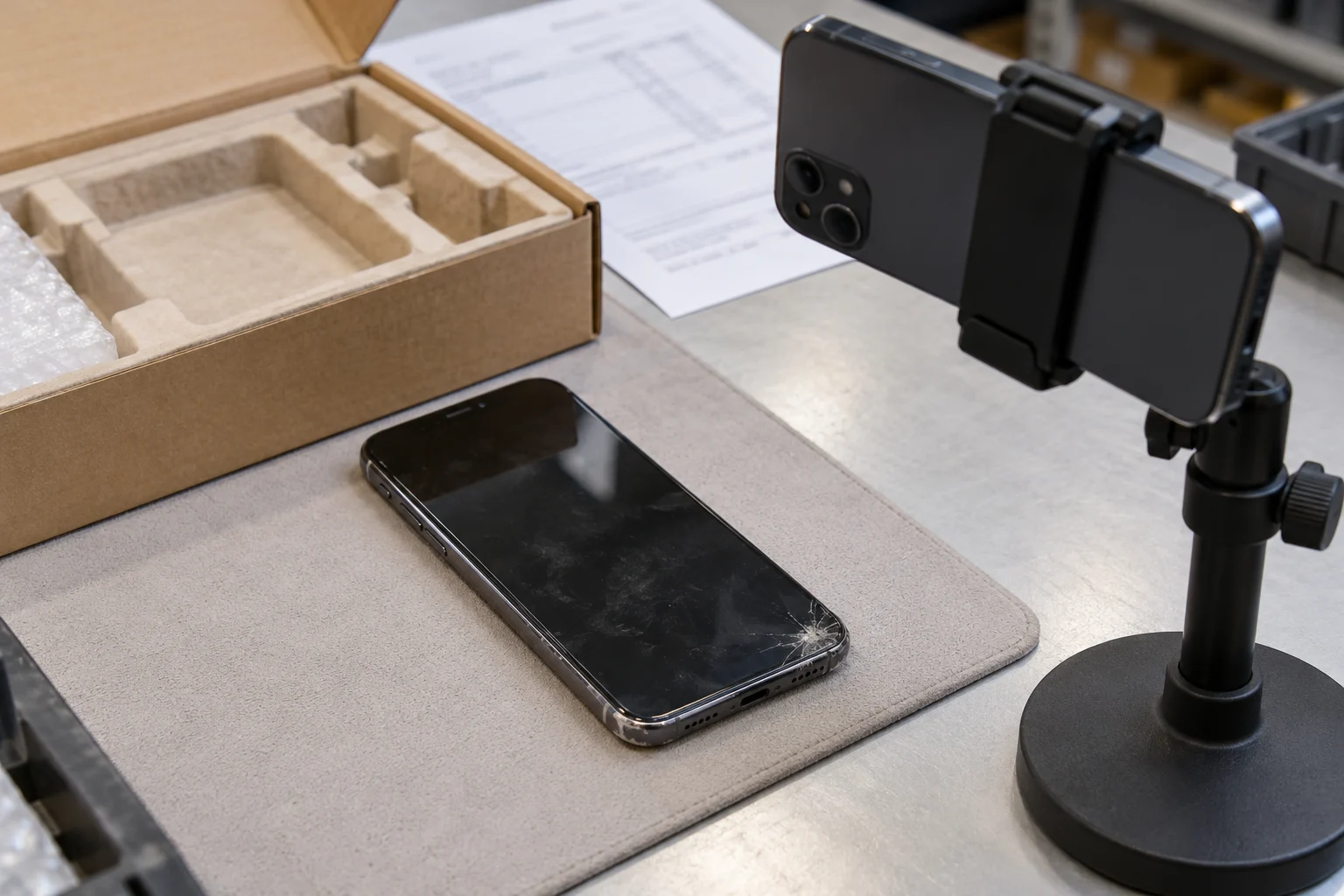
Set receiving work around the earliest applicable deadline. Keep count discrepancies, cosmetic complaints and functional faults distinct, then match each issue to the policy that covers it. Where approval and arrival are separate requirements, retain the authorization and delivery tracking as well as the original notice.
Which documents should you collect before payment?
Keep one order file that connects the accepted offer to the delivered phones. Complete the prepayment entries first, then add the receiving evidence and deadline dates when the shipment arrives.
| Document or record | Before payment | At receiving or during a claim |
|---|---|---|
| Accepted quotation or sales order | Lot reference; model, capacity and grade quantities; MOQ basis; substitution and take-all terms | Match the invoice and received allocation to that version |
| Seller’s grading schedule | Cosmetic allowances, functional promise, battery floor and exceptions | Record the specific agreed condition behind each reported mismatch |
| Manifest and packing specification | Line quantities; testing status; exact or indicative mix; included accessories | Count units by line and retain carton or lot references |
| Returns and RMA terms | Eligible problems; clock triggers; required steps; freight, fees and remedies | Enter actual notice, authorization and return-arrival deadlines |
| Receiving and discrepancy record | Prepare fields for delivery date, identifiers, count, issue and photos | Attach packaging photos, affected-device details, correspondence and tracking |
Before approving payment, check that the documents tell the same story. A tested-stock promise must align with the lot’s functionality disclosure; the battery commitment must cover the grades ordered; the agreed mix must fit the manifest; and the remedy must address the deviations you would need to report. Resolve conflicting terms in the accepted order, then use that same record when receiving the shipment.
For the broader topic and related guides, see Wholesale Buying.
Frequently asked questions
Are boxes, cables and accessories included in a wholesale phone grade?
Check the packing specification separately. ICS Wireless's grading policy says original boxes, cables and accessories are excluded. If your offer includes accessories, list them on the order and packing record. Also check what must accompany an authorized return: Reagan Wireless requires all kitted accessories.
Can I send defective phones back as soon as I find them?
Follow the seller's authorization procedure before shipping. Reagan Wireless's FAQ requires prior return authorization and a completed RMA form including the invoice number. Keep the approval, return tracking and proof of delivery with the affected-device list, and meet any return-arrival deadline as well as the reporting deadline.