
Key takeaways
- Match the distributor to your restaurant, retail store or other buying operation before asking about products.
- Record the local operating unit and its acceptance of your service address; a national name does not fill either field.
- Take temperature requirements from the product instructions and agreed shipment conditions, with the source recorded.
- Assign transport and receiving responsibilities before ordering, and carry unresolved fields into the buyer worksheet.
A food order can miss its purpose when the seller cannot serve your address or the case pack does not fit your operation. To choose food distributors in the USA, confirm your buyer channel, local service, product specification and delivery responsibilities before comparing the order price.
This guide is for restaurants and retailers buying food for their own operations. It provides discovery routes and a copyable buyer fit record. For broader identity checks, use the supplier research guides; this page focuses on the food order and its handoff to your receiving team.
| Input | Where to get it | What it decides |
|---|---|---|
| Buyer channel | Your business description: restaurant, grocery retailer, convenience store or another operation | Which seller account route to investigate |
| Delivery address and access | Your actual receiving location and staffed hours | Whether the local operation can make the delivery |
| Products and packs | Your purchase list and the seller’s current item specification | Whether the offered units fit your use or resale |
| Storage and transport conditions | Product instructions and written shipment requirements | What the seller, carrier and receiver must arrange |
| Order terms | The actual seller’s dated response | Whether minimums, charges and delivery arrangements work for you |
Start with the buying channel, then collect distributor leads
The International Foodservice Distributors Association member directory is one starting point for foodservice leads. IFDA describes members across broadline, custom, convenience and specialty distribution. Its list includes Sysco, US Foods and Gordon Food Service, alongside other member businesses. These are discovery names, without a ranking or a claim that any will accept your account.
For a restaurant, begin by asking whether the candidate serves your kind of operation at your address. For a grocery retailer, specify that you need goods for retail resale and the relevant consumer packs. Do not assume that a foodservice lead offers the retail assortment or ordering arrangement you need.
| Your purchase task | Route to investigate | First question for the actual seller |
|---|---|---|
| Several food categories for a restaurant kitchen | A broadline foodservice candidate | Can the local operation supply this item list to this address? |
| A particular ingredient or product category | A specialty candidate or a route identified by the product maker | Which exact products and packs can you supply? |
| Packaged goods for a retail shelf | A distributor that explicitly serves retail buyers | Can you supply the consumer units, outer cases and product information needed for resale? |
| An account tied to a chain or specified program | The program’s designated ordering route | Is this location eligible to buy through that arrangement? |
These are screening questions. A directory membership or a company-wide product description does not answer them. Save the source where you found each lead, then obtain a response from the operating unit that would handle the order.
Confirm the local branch and the exact order line
Ask for the seller’s invoicing name, the local operating unit and confirmation that it serves the receiving address. Record the order contact and the date of that confirmation. If a response comes from a corporate enquiry channel, ask which local team will accept and fulfill the order.
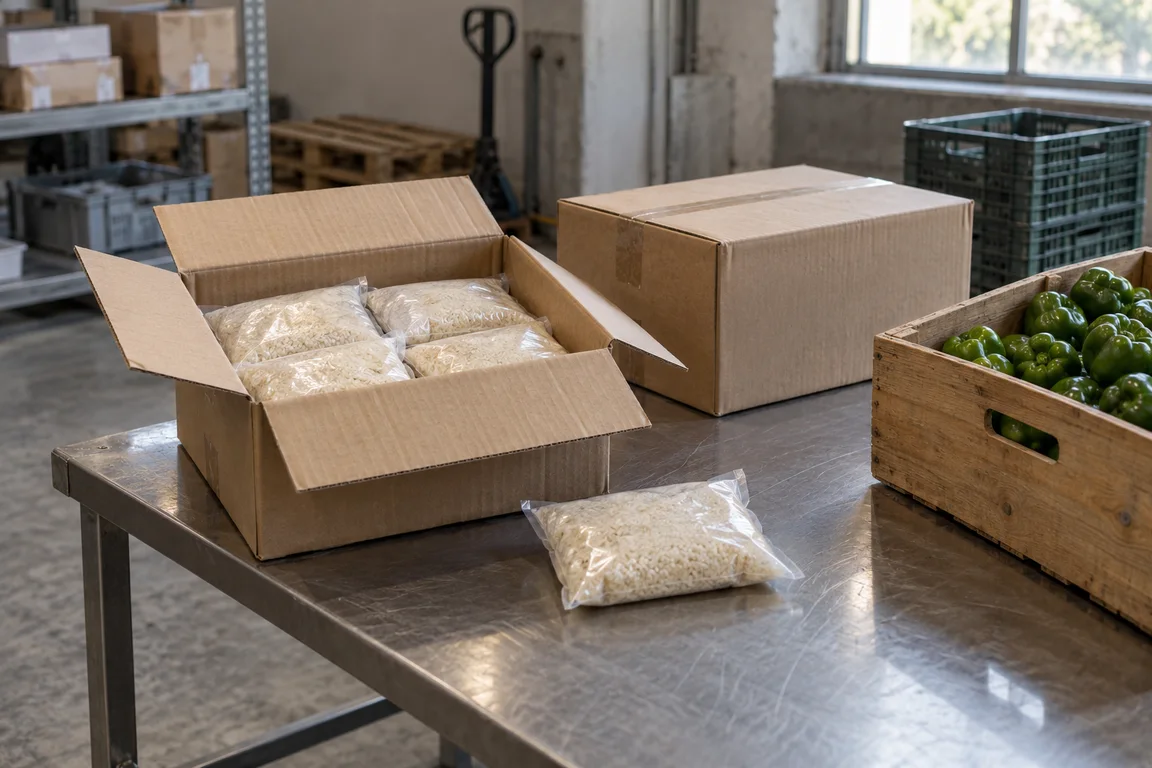
Then match the item description to your purchase list: seller SKU, product name, unit size, units per case, order quantity and any permitted substitution. Request the product label or specification where those details are missing. A kitchen ingredient pack and a consumer retail unit should occupy separate lines in your comparison.
Request dated stock availability, the order minimum, delivery charges, order cutoff, delivery window, substitution terms and the process for shortages or damaged goods. Leave any unanswered item blank. The page where you found a product cannot fill an order confirmation that the seller has not issued.
Run the supplier identity and payment checks alongside this record. Product fit alone does not establish who is receiving your payment.
Attach product conditions and name the responsible parties
Record the required storage and transport conditions for each product, with their source. Ask the seller to resolve a missing or conflicting instruction before committing to that line. Do not assign one cold-chain temperature to every food category.
FDA’s sanitary transportation overview describes equipment suitability and controls for temperature, contamination and allergen cross-contact in covered motor and rail transport. Its waivers and exemptions matter: the framework does not impose identical duties on every restaurant, retailer, product or journey. This is an explanation of the 2016 rule, rather than a new October 2026 requirement.
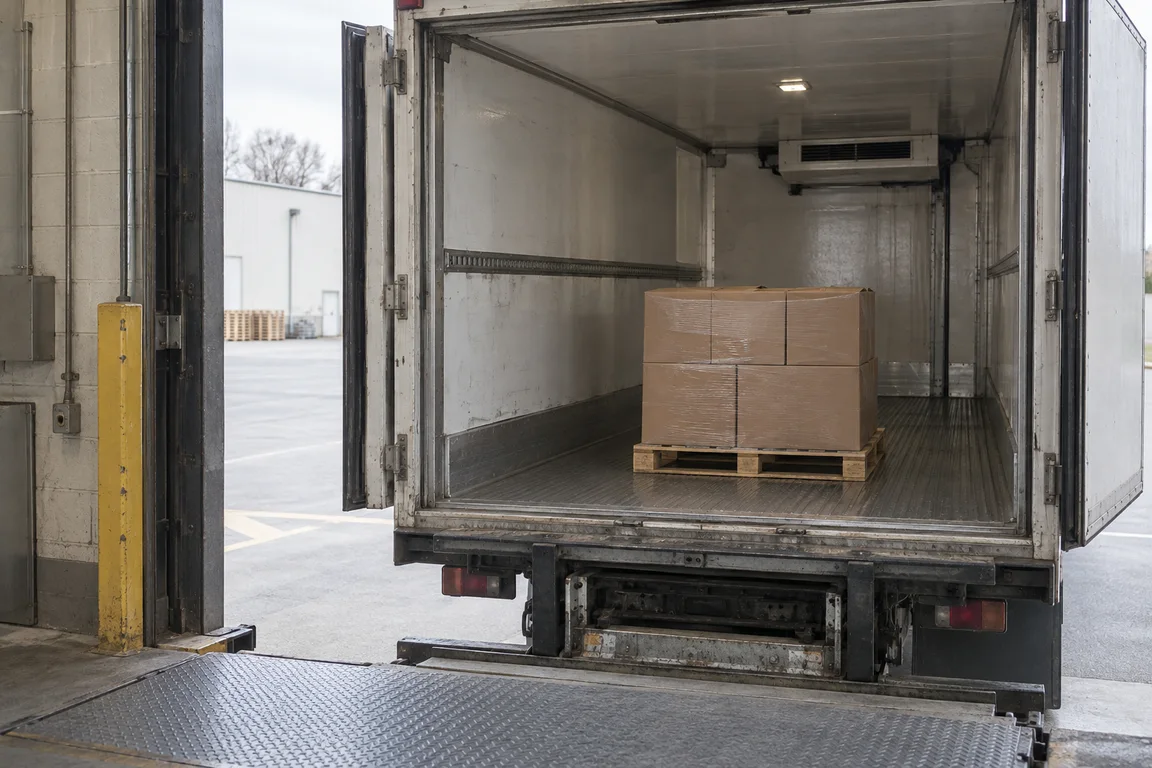
For covered operations, FDA’s key changes explanation places primary responsibility with the shipper and describes agreements assigning duties. It also discusses loading preparation and agreed temperature monitoring. Use the buyer record to ask who arranges the vehicle, loading checks, monitoring evidence and receiving assessment. A generic promise of refrigerated delivery does not name those parties.
If a covered party becomes aware of conditions that may make food unsafe, FDA says sale or distribution must wait for a safety determination. Ask for the responsible contact and hold procedure in advance; appearance alone cannot resolve a suspected temperature failure.
Copy this food distributor buyer fit record
Use one record per candidate and receiving location. Split product lines when their packs or handling requirements differ. The empty value column is intentional: fill it from your own requirements and the actual seller’s documents, recording the source and date beside each answer.
| Field | Value for this candidate | Evidence or question to resolve |
|---|---|---|
| Buyer channel and business name | Describe the operation buying the goods | |
| Service address and receiving access | Full address, staffed hours, dock or other unloading arrangements | |
| Seller and local operating unit | Invoicing entity and branch accepting this address | |
| Product and case specification | SKU, unit size, units per case, quantity and substitution permission | |
| Availability and order terms | Dated stock response, minimum, charges, cutoff and delivery window | |
| Storage and transport conditions | Product instruction or written requirement; attach its source | |
| Shipper, loader and carrier | Named parties and agreed responsibilities for this shipment | |
| Transport evidence | What condition or monitoring evidence is available, and who supplies it | |
| Receiver and arrival checks | Person assessing receipt and the product-specific checking procedure | |
| Shortage, damage or suspected safety problem | Seller contact, documentation, hold procedure and agreed claim process | |
| Still awaiting confirmation | Every missing or conflicting answer, with the person asked | |
| Next action and review date | Proceed, hold for an answer, or remove from this order’s shortlist |
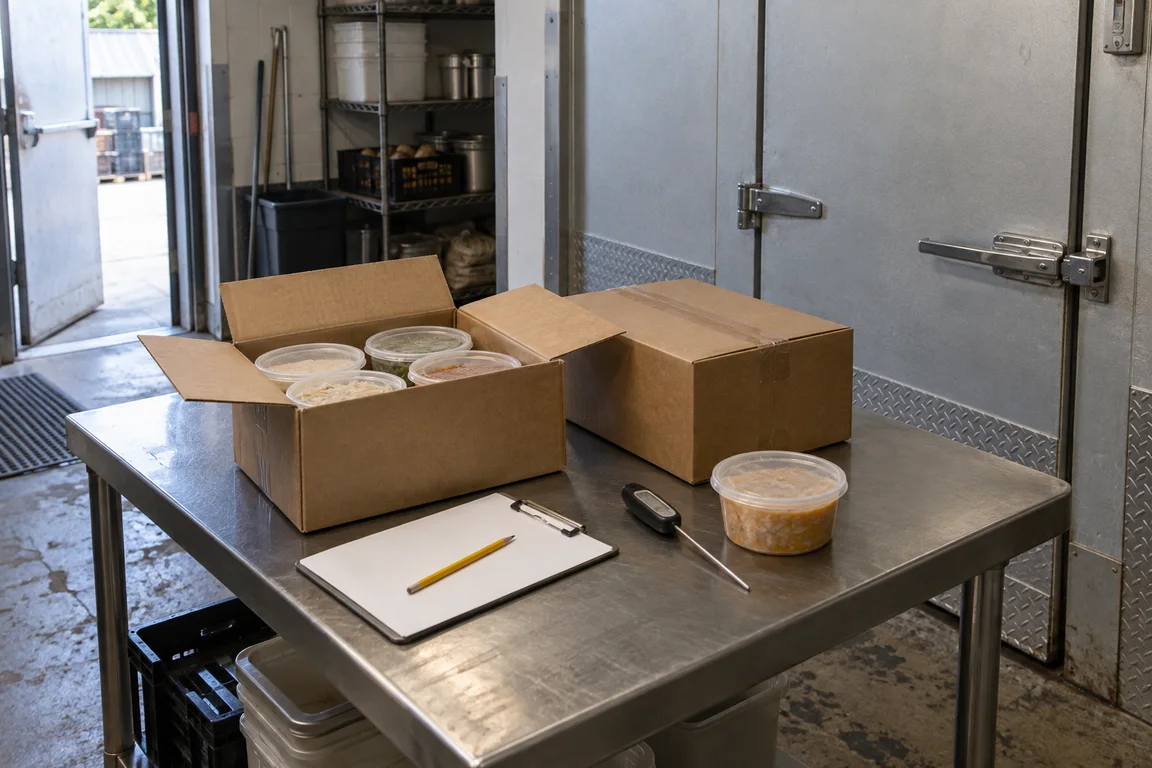
Before delivery, share the completed record with the person receiving the goods. Use the warehouse pickup and receiving guide for the wider handoff, while keeping food-specific conditions and checks attached to the order. When a purchase order involves food imported from a foreign supplier rather than cleared domestic warehouse stock, verify whether your business or the upstream importer is responsible for the FSMA Foreign Supplier Verification Program (FSVP).
Make the shortlist decision from the open fields
Keep a candidate under consideration when its local operation confirms your address and channel, the product lines fit, and the delivery and receiving arrangements can be met. That supports the next purchasing discussion; it does not certify the distributor or prove the shipment will arrive correctly.
Hold the affected order line when a required condition, responsibility or commercial term remains unresolved. For example, a seller’s case price leaves the comparison open if you still lack the case count or delivery charge. Ask for those fields before treating the prices as comparable.
Remove a candidate from this order’s shortlist when it confirms that it cannot serve the location, provide the required product or meet your receiving arrangements. A business can be unsuitable for this purchase without being an illegitimate supplier.
Save the record with the seller’s dated replies and product documents. Send the unresolved questions to the actual seller, and refresh the record when the branch, product or delivery arrangement changes.
Sources
- Distributor Members — International Foodservice Distributors Association Accessed October 15, 2026.
- FSMA Final Rule on Sanitary Transportation of Human and Animal Food — U.S. Food and Drug Administration Accessed October 15, 2026.
- Key Changes in the FSMA Final Rule on Sanitary Transportation of Human and Animal Food — U.S. Food and Drug Administration Accessed October 15, 2026.