For wholesale unlocked phones, make the invoice approval decision about the exact devices and the written promise. Ask for a defined carrier-lock condition, separate account-protection declarations, a device identifier attachment, and an agreed response to later billing-related restrictions. Use the checklist below as your purchasing conditions and obtain the seller’s acceptance before ordering.
Start with the wholesale buying guide for the broader buying process. For this order, keep the accepted quotation, invoice, device attachment and packing list together.
Define what the seller means by unlocked
Unlocking an iPhone means it can be used with different carriers. On an iPhone, “No SIM restrictions” next to Carrier Lock indicates that the phone is unlocked. Only the current carrier can unlock an iPhone for use with a different carrier.
Ask the seller to spell out what “Factory Unlocked” or “Carrier Unlocked” means in this offer. Request the current carrier-lock status, any substantiated original-carrier history, and evidence of the completed unlock. If the seller describes an unlock request as pending, hold invoice approval until the agreed completed status is documented.
Use separate fields for the seller’s label and the observed status. Do not infer the original sales history from a current status reading. For bulk used phones with different histories, ask the seller to associate each declaration with the relevant device identifiers.
Put account protection on its own line
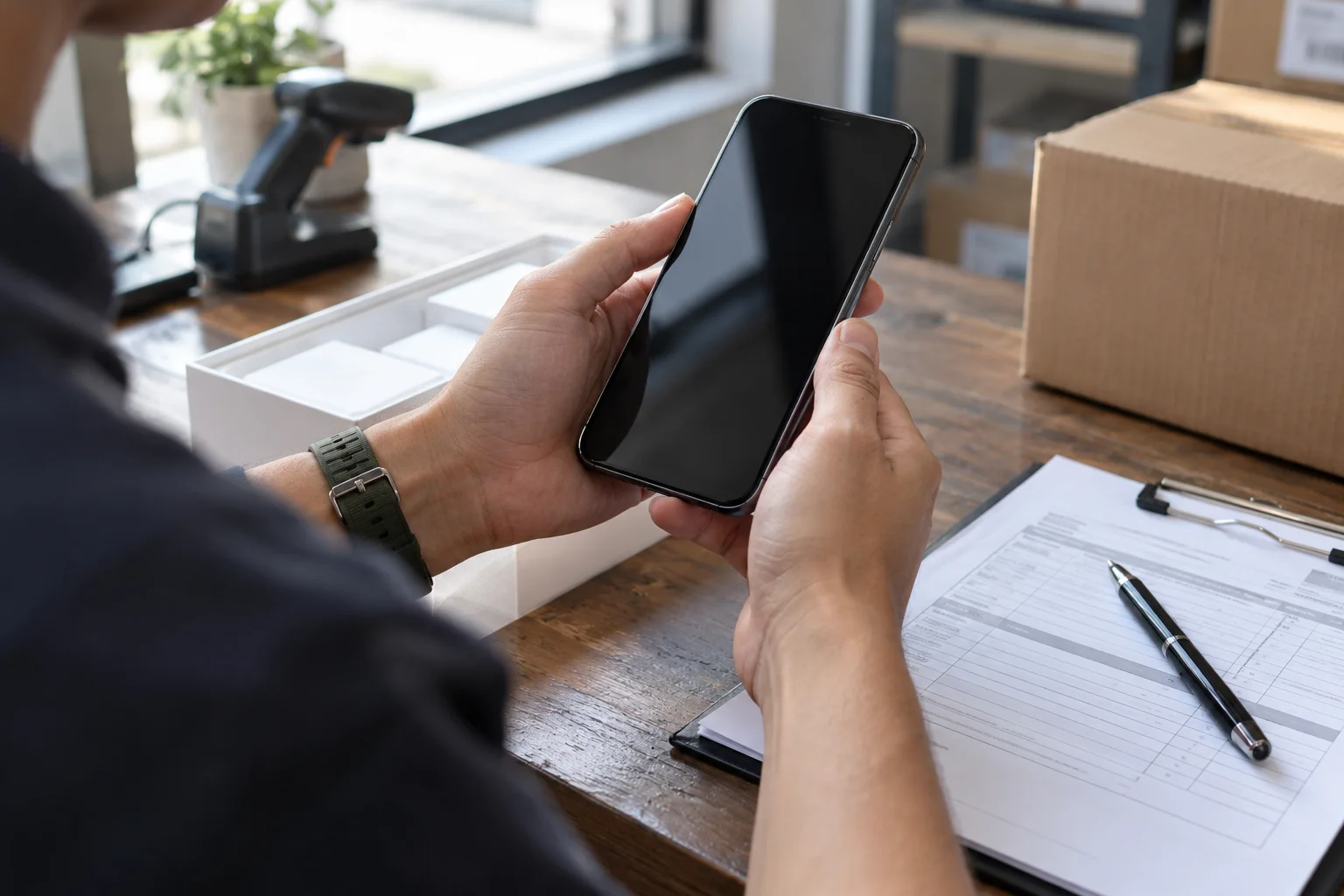
Activation Lock turns on automatically when Find My is turned on. Before buying an iPhone or iPad from someone other than Apple or an Apple Authorized Reseller, Apple advises checking that the device is erased and no longer linked to the previous owner’s account. Google says to remove the Google Account from the device to turn off device protection.
Request separate seller declarations for carrier lock and account protection. For Apple devices, ask for the agreed Activation Lock condition; for Android devices, ask for the applicable Google device-protection condition. Attach any disclosed exceptions to the affected devices rather than accepting a general “clean phones” description.
At receiving, record the observed condition against each promised field. Keep carrier-lock evidence and account-protection evidence separately identifiable. Require the seller to explain the return route for a mismatch in either field before approving the order.
Match the invoice, device attachment and cartons
On an iPhone, find the IMEI in Settings, General, About.
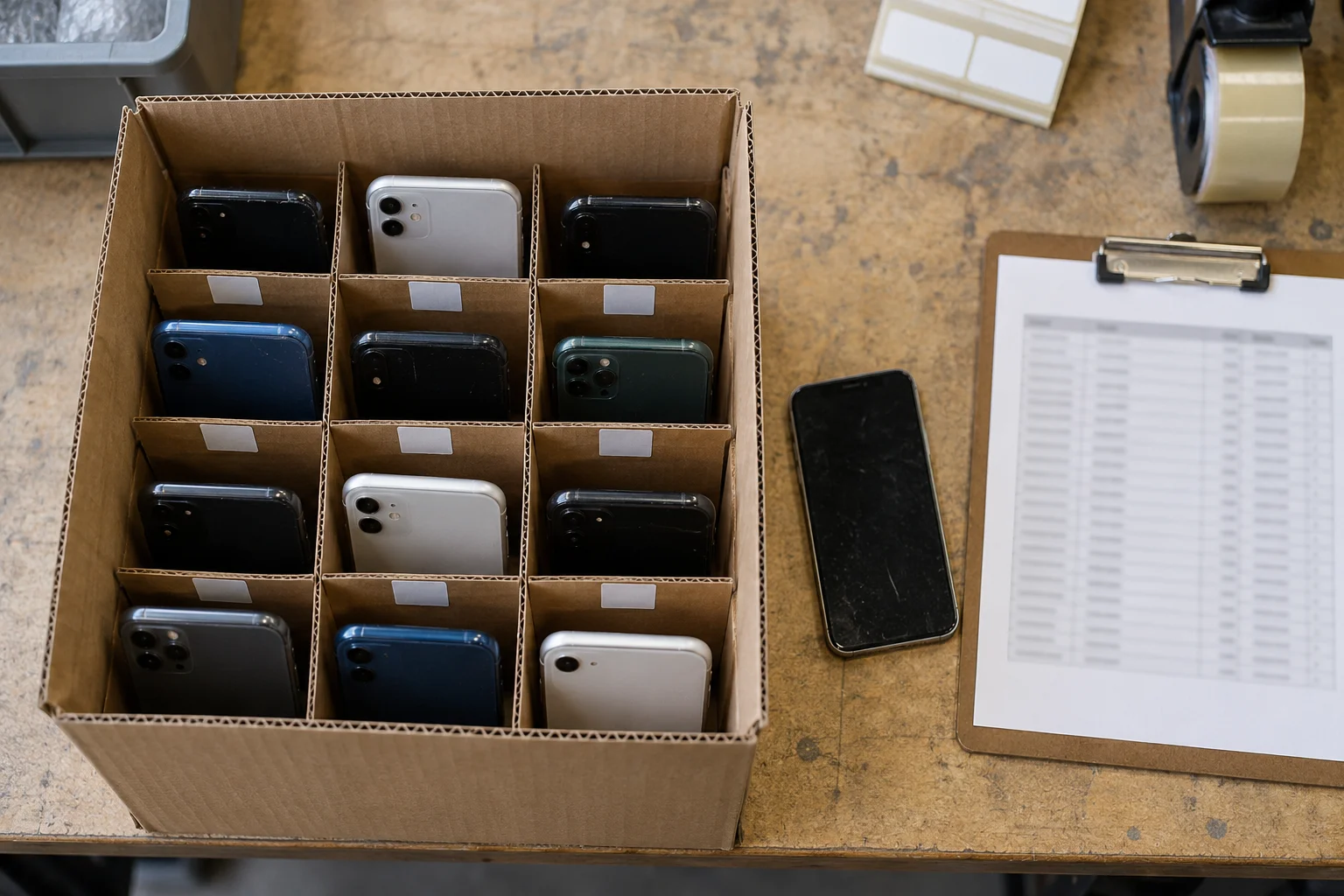
Ask for a device-level attachment containing the IMEI, the invoice reference, the applicable lock declarations and the associated carton. Add a revision reference and require approval for substitutions. Compare the shipped identifiers with the accepted attachment before signing off on the delivery.
For export shipments, a pro forma invoice serves as a negotiating tool between seller and buyer before shipment. A commercial invoice is a bill for the goods from seller to buyer. An export packing list itemizes the contents of each package. An export packing list is not a substitute for a commercial invoice.
For an export order, negotiate the lock wording on the pro forma, carry the accepted wording into the commercial invoice, and reconcile the device attachment with the packing list. For each carton, check its label against the attachment and record any missing, additional or substituted handset. Save the accepted version alongside the received version.
Use the price list versus stock list guide when reconciling the initial offer with the stock allocated to your order. Keep the final allocated-device list with the invoice.
Agree responsibility for later financial blocks
AT&T unlock eligibility requires that the device has not been reported lost, stolen, or involved in fraud. For T-Mobile postpaid unlock eligibility, a device financed or leased through T-Mobile must be paid in full.
A device’s GSMA Block List status may change after a check. In certain circumstances, a carrier may block a device because of billing issues with its owner. A device blocked for those billing issues may remain blocked with that carrier without appearing on the GSMA Block List for that reason.
Ask for a dated status report tied to the device identifiers. Record the check service, result and seller’s declaration about outstanding payment obligations. Then negotiate the financial-block remedy separately: which events qualify, when coverage starts and ends, what evidence you must submit, and whether the response is replacement, refund or another agreed resolution.
If the seller offers a financial-blacklist guarantee, request the complete written terms. Identify the responsible seller, covered devices, exclusions, notice method, response deadline and return costs. Fill in the agreed periods before acceptance; do not leave the claim window as “standard warranty”.
Reconcile as-is wording before payment
Read any “as-is” wording alongside the specific lock commitments. Ask the seller to identify which conditions it applies to and to reconcile any conflict with the agreed unlocked description. Require the final order documents to state the accepted condition and remedy clearly.
Keep cosmetic grade, battery terms and other condition promises in their own fields. Use the wholesale cell phone lot terms guide to review those portions of the offer. Here, make the decision on lock wording and the associated claim terms.
Your unlocked phone wholesale invoice checklist
Use this list when requesting the final documents. Ask the seller to answer each item against the offered lot, then retain the accepted wording with the invoice.
- Lock description: Define the seller’s unlocked label and the promised current carrier-lock state. Request evidence of completion.
- Account protection: Request separate Apple or Google account-protection declarations for the applicable devices. Identify every agreed exception.
- Device attachment: Request each device identifier, its invoice reference, the applicable status declarations and the attachment revision.
- Packing match: Match carton references and delivered identifiers to the agreed attachment. Resolve substitutions before acceptance.
- Check record: Save the named service, result and check date beside the relevant identifier.
- Financial-block terms: Agree covered events, the coverage period, required evidence, notice route, return costs and remedy.
- Conflicting wording: Reconcile as-is language, exclusions and generic warranty text with the specific lock promise.
- Approval record: Retain the seller’s acceptance and the final document versions with the receiving notes.
Questions to settle before approving the order
What should I request when the invoice says only “unlocked”?
Request a written definition, the current carrier-lock condition, separate account-protection declarations and the device identifiers to which each promise applies. Ask the seller to incorporate that wording into the accepted invoice and attachment.
What should I do with an online-purchased iPhone showing an owner lock?
Apple advises returning an online-purchased iPhone if it displays “iPhone Locked to Owner”. Save the screen evidence and device identifier with the invoice, then follow the agreed return procedure.
What if the seller sends a status report without claim terms?
Request the written claim procedure before approving the order. Agree the qualifying failure, evidence, notice deadline, return arrangements and remedy. Keep the accepted procedure with the report and device list.
Sources
- Apple — How to unlock your iPhone
- Apple — Activation Lock for iPhone and iPad
- Google — Prevent others from using your device without permission
- Apple — Find the serial number or IMEI
- International Trade Administration — Common Export Documents
- International Trade Administration — Packing List
- AT&T — Unlock device eligibility
- T-Mobile — SIM unlock policy
- GSMA — Device Check Terms of Use
- Apple — If you want to buy a preowned iPhone
For the broader topic and related guides, see Wholesale Buying.