
Key takeaways
- Copy the seller's grade sentences onto the record. The letters A, B and C on one seller's FAQ are that seller's definitions.
- Write pieces or weight only when the seller states the unit. A page that says "by the bundle" has not chosen.
- Thrift Vintage Fashion says it ships clothing unwashed. Ask any other seller who washes and who sorts, and keep the reply.
- Thrift Vintage Fashion's FAQ and return policy disagree on the report window and the packed-order fee. Do not fill the longer window in yourself.
- Photograph the whole lot before you sort it, list pieces you cannot sell, and send every blank line to the seller who would invoice the order.
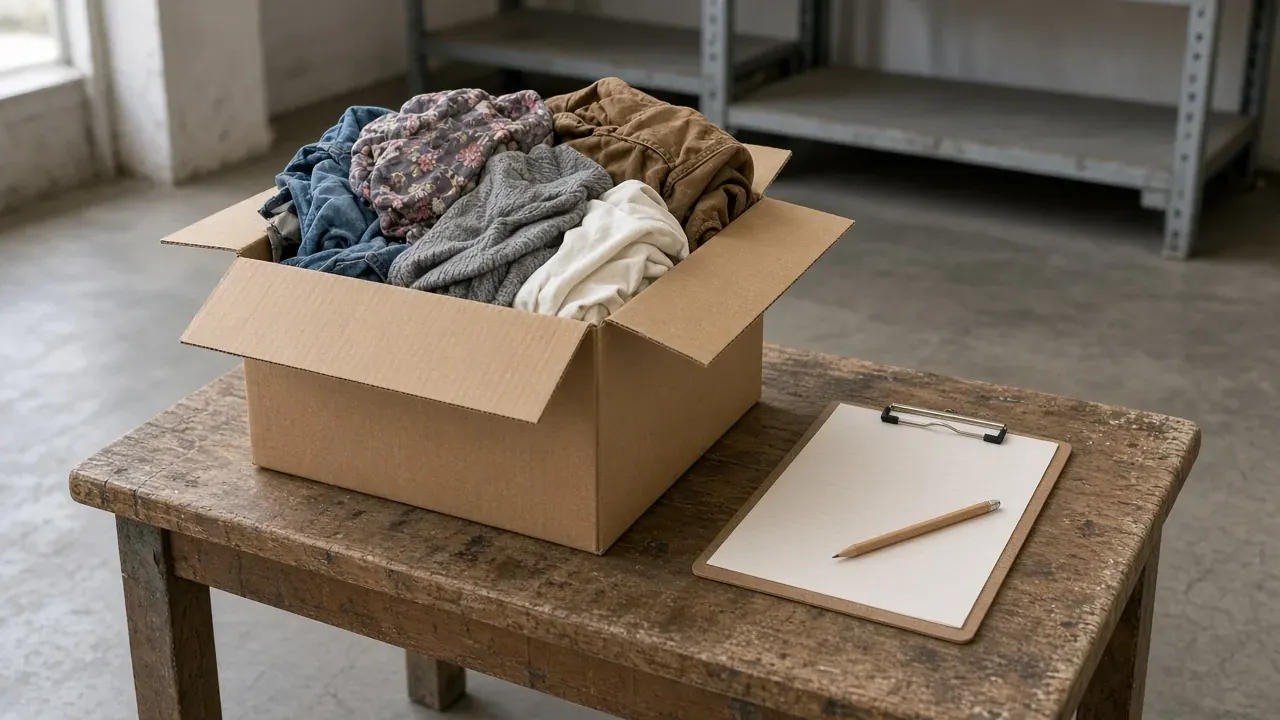
A random used mix can arrive with more damaged pieces than the seller’s grade wording allows, and with no agreed window for reporting them, so garments you cannot resell stay on your account. Before you pay for a random mix of wholesale vintage clothing, copy that seller’s grade definition, whether the count is pieces or weight, who washes and sorts, and the written conditions for reporting a problem on this order.
This page is for a reseller buying used clothing in a random mix, where the seller chooses the individual garments. It gives you a purchase and receiving record. National Wholesalers is an independent publication. We do not sell clothing, grade bundles, or write to sellers for you. Accounts, quotations, and payment sit with the other wholesale buying guides.
Pages that rank for wholesale clothing vintage include used mixes and new clothes cut in older styles. Unique Vintage’s wholesale page, captured October 11, 2026, describes vintage-inspired clothing, linesheets, dresses, shoes, and accessories. A buyer who wants a used random mix is looking at a different product. The checks below apply to the used mix.
| Field | What to write | Where it comes from |
|---|---|---|
| Seller | The business that would invoice this order | The listing and the invoice name |
| Grade wording | The seller’s own sentences for each grade on this bundle | The page or email that defines the grades |
| Allowed defects | Holes, stains, fading, or a percentage, copied as written | The same document, or a second page if they differ |
| Quantity | The number and the unit: pieces or weight | The listing for this bundle |
| What you can choose | Category, decade, or garment type, if the listing offers it | The listing title and options |
| What you cannot choose | Styles and sizes the buyer does not pick | The listing, plus any line that excludes style or fit complaints |
| Washing | Who washes, and whether stains that would wash out stay in the mix | The seller, in writing |
| Sorting | Who grades or sorts, and whether the buyer can pick pieces | The seller, in writing |
| Whole-lot photos | File names and the date, taken before you remove pieces | You, when the carton arrives |
| Pieces you cannot sell | Count, photos, and the reason for each | You, after you open the lot |
| Dispute window | Hours or days, and what starts the clock | The seller’s written confirmation for this order |
| Packed-order fee | The fee if you cancel after the seller has packed | The same written confirmation |
| Still open | Every blank line and every conflict between two of the seller’s pages | Your notes, until the seller answers |
Copy the seller’s grade wording
Write the grade definition that belongs to this bundle, in the seller’s words. Thrift Vintage Fashion’s FAQ, captured October 11, 2026, uses three labels:
| Label on that FAQ | Wording on that FAQ |
|---|---|
| Grade A | Gently used. No major flaws. Clean and ready to sell. |
| Grade B | Visible wear such as small holes, stains, or fading. |
| Grade C | Heavy wear, described there as suited to upcycling, rework, or filler. |
The same FAQ says that, unless a pack says otherwise, most of their packs are a mix of mostly Grade A with some Grade B. It also says they sell B-grade-only packs at a lower price for rework. Those sentences describe packs that seller offers. Another seller can use A, B, and C for a different condition. The research behind this page did not find a shared industry definition that those letters must follow.
The return policy on the same site, captured the same day, adds a percentage the FAQ does not. It says the company allows up to 15% Grade B in each mix, including minor holes or permanent stains, and that washable stains are included because the garments are not washed. It also says a case worth contacting them about is significantly more than 15% damaged items, which the policy describes as generally more than 5% above 15%, or the wrong category, with photos of the entire mix. Put both wordings on the record. Leave the “allowed defects” line for your order blank until the seller confirms which page governs this bundle. The 15% figure is that policy’s allowance. It is not a defect rate for used clothing in general.
Common mistake: Treating A, B, and C as a standard you can carry from one seller to the next. If the listing does not define the letters, the grade field is empty.
Takeaway: Copy the grade sentences from the page that covers this bundle, and keep a second wording on the record when another page from the same seller disagrees.
Record pieces or weight
A bundle title can name a category and still skip the count. On Bulk Vintage’s bundle category, captured October 11, 2026, listings include “1940s, 1950s, 1960s Dresses by the bundle,” “1970s women vintage Blouse mix by the bundle,” and “Childrens’ / Kids Vintage (boys & girls) by the bundle.” The category page gives the garment type and, in several titles, a decade. It does not state how many pieces are in a bundle, or a merchandise weight.
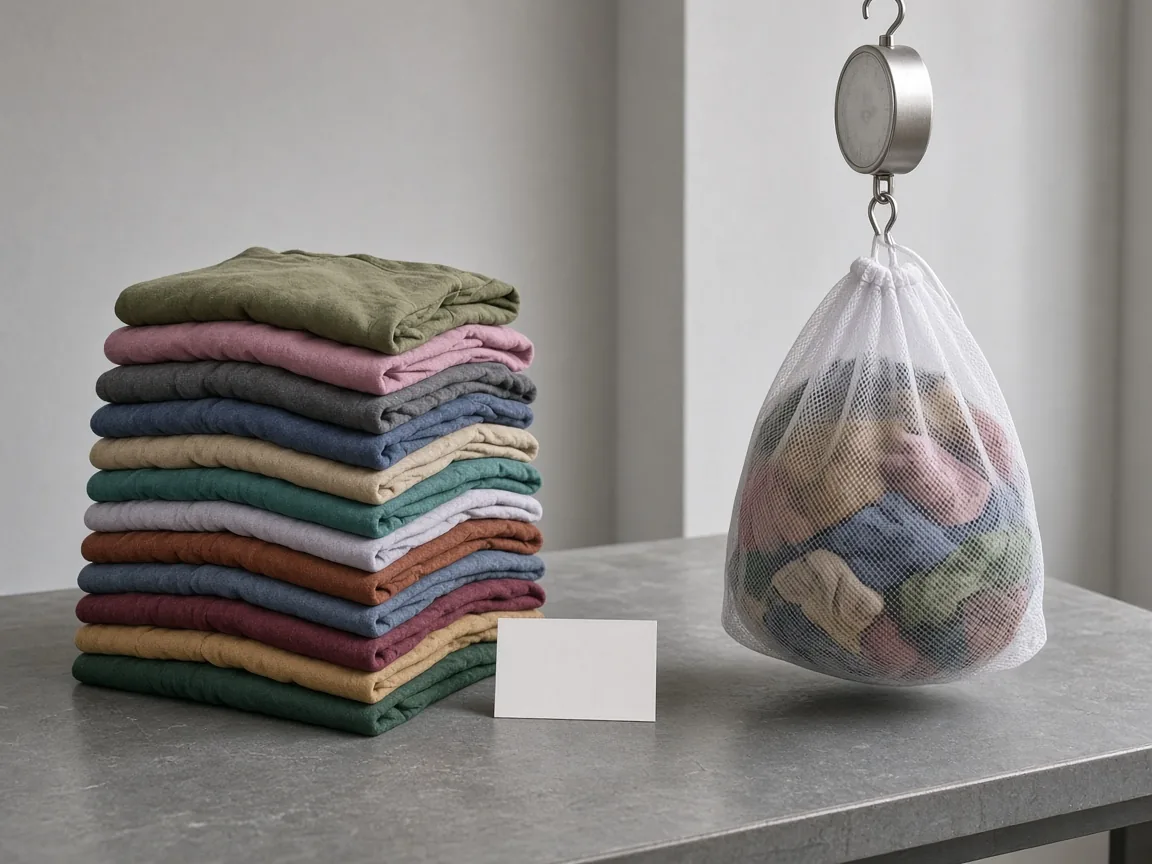
Bulk Vintage’s shipping page, captured the same day, says shipping cost is based on the weight of the order and the number of boxes. That is a freight calculation. It does not tell you how many garments you are buying. The same page says the company tries to ship within 3 to 4 business days, that some products take longer to gather and grade, and that international mail generally takes 7 to 10 business days and is not a guaranteed delivery time. Thrift Vintage Fashion’s FAQ says orders usually ship in 24 hours on weekdays and gives U.S. transit of 3 to 5 business days. None of those sentences is a delivery date for your order. If you need the goods by a certain day, ask the seller for a written ship date for this order and keep it in its own field.
An order-value minimum, a units-per-line minimum, and a case pack are a separate question. The wholesale MOQ guide covers those minimums for ordinary wholesale orders. This page does not reuse minimums or profit ranges from older pages on this site. For a used mix, the quantity line is the piece count or the weight the seller states for this bundle.
Takeaway: If the listing says “by the bundle” and nothing more, the quantity field stays blank until the seller states pieces or weight.
Record who washes and who sorts
Thrift Vintage Fashion’s FAQ answers “Do you wash the clothing before shipping?” with no. It says items ship unlaundered and tells the buyer to wash before resale or wear. The return policy repeats that garments are not washed before shipment, and it uses that fact to explain why washable stains are in the order. On a record for that seller, washing is “seller does not wash; buyer washes before resale or wear,” with the FAQ and the policy as the sources. For a different seller, leave the line blank until you have that seller’s sentence.
Sorting is a second line. The FAQ says the company does not cherry-pick, in answer to a question about resale, and it says most packs mix mostly Grade A with some Grade B unless a pack says otherwise. Bulk Vintage’s shipping page says some products take longer to gather and grade. Those lines say the sellers describe grading as their own work. They do not name a person, a crew, or a checklist. Write “seller states that it grades” only when you can point at the sentence, and write “not stated” for anything the sentence skips, such as whether every piece is inspected or only a sample.
Common mistake: Reading one seller’s “we do not wash” line as a rule for every used-clothing wholesaler. The sentence is on that seller’s pages.
Takeaway: Put washing and sorting on two lines, each with the seller’s sentence or the words “not stated.”
Mark styles and sizes you cannot choose
On a random mix, the buyer picks the bundle, and the seller picks the garments inside it. Thrift Vintage Fashion’s FAQ says all sales are final and that it does not accept returns based on subjective style, fit, or condition. The return policy says the company does not accept returns or exchanges because a buyer dislikes styles or fit, and it suggests trying a small quantity before a larger one. Together with “we don’t cherry-pick,” those lines mean a buyer of that seller’s mixes does not choose the style or the size of each piece, and a later complaint about style or fit is outside the remedy those pages describe.
Bulk Vintage’s category page is narrower in a different way. You can choose a listed bundle, such as a 1980s blouse bundle or a children’s vintage bundle. The page does not say you can choose the style, color, or size of the pieces inside it. On the record, write the category the listing lets you select. Write individual style and size as “not offered on the page,” and ask the seller to confirm that before you pay.
New clothing, where you can specify a style and a size run, is a different purchase. The apparel channel guide covers new clothing sources and says it does not cover secondhand bundles. Keep that guide for new goods. Keep this record for the used mix.
Takeaway: Write the category you are allowed to select, and write style and size as not selectable unless the seller says you can choose them.
Photograph the whole lot, then list pieces you cannot sell
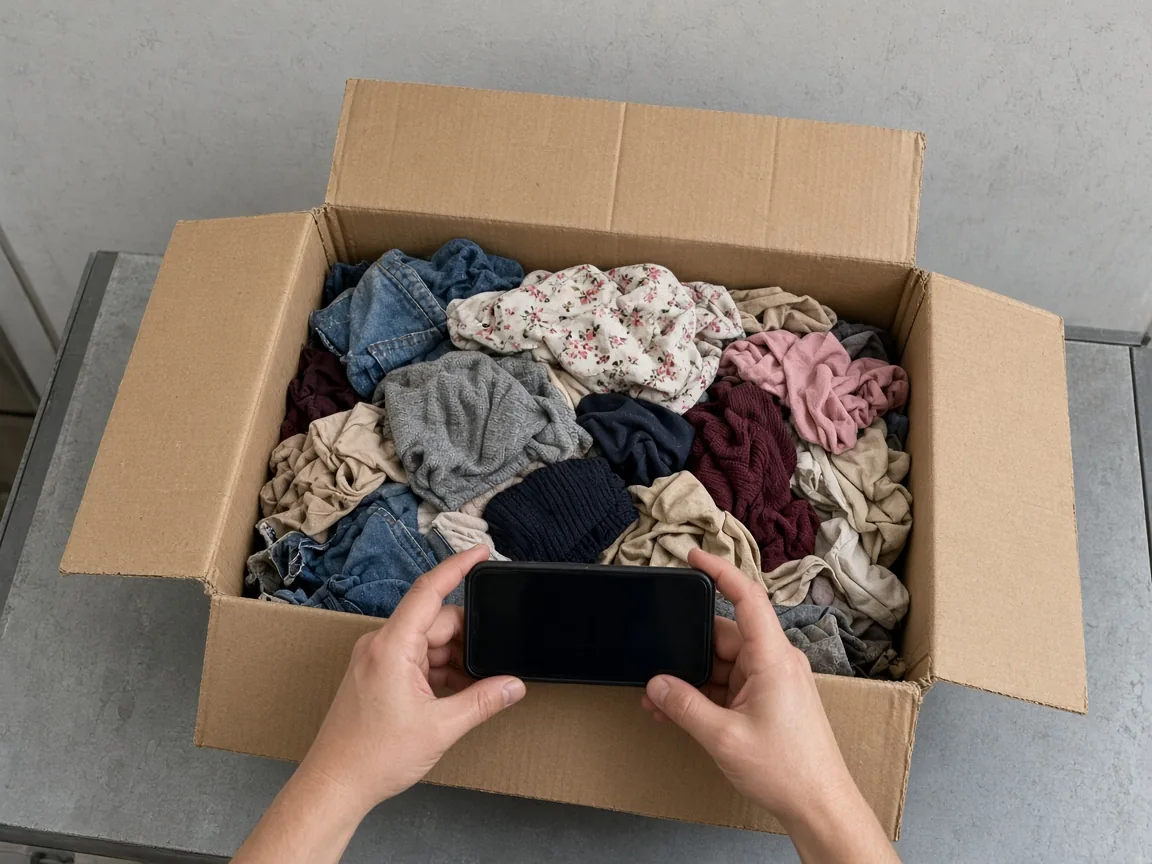
When the carton arrives, photograph it before anyone pulls garments out. Thrift Vintage Fashion’s return policy asks for photos of the entire mix when the buyer thinks the damaged share is too high or the category is wrong. The FAQ asks for photos within 72 hours for an incorrect mix, the wrong category, or a significantly higher share of damaged items. A photo of one hole, taken after the lot has been sorted onto a table, is a weaker match to “photos of the entire mix” than a photo of the carton as it arrived, plus close-ups of the pieces you set aside.
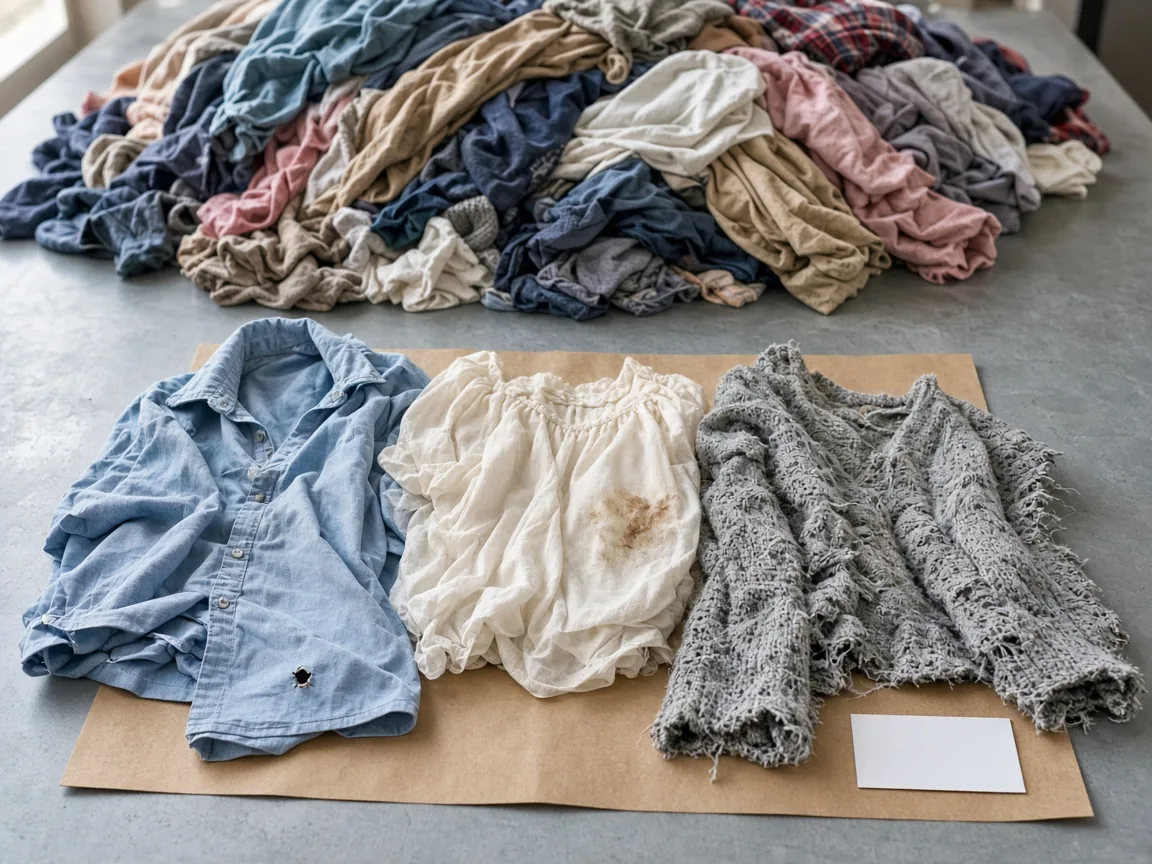
Then list pieces you cannot sell in your own channel. Give each one a reason you can see, such as a hole, a stain that does not wash, or wear heavy enough that you would not offer it. Thrift Vintage Fashion’s Grade C wording is that seller’s label for heavy wear suited to upcycling, rework, or filler. Your unsellable count can differ from their grade label, because your customers and theirs are not the same. Keep your count, your photos, and their grade wording in separate columns.
Compare your count with the allowance the seller confirmed for this order. If the only percentage you have is the 15% Grade B line on Thrift Vintage Fashion’s return policy, label it as that policy’s sentence and leave it in the open-items list until the seller confirms it applies. A crushed carton or a missing box is a freight problem. The receiving guide covers delivery exceptions. The mix itself stays on this record.
Takeaway: Keep one set of photos of the whole lot and a separate list of pieces you cannot sell, each with its own photo.
Leave the dispute window blank until the seller confirms it
Thrift Vintage Fashion’s FAQ and return policy, captured October 11, 2026, do not say the same thing about reporting a problem or canceling a packed order. The table uses their wording. It does not choose a winner.
| Topic | FAQ | Return policy |
|---|---|---|
| Reporting a problem | Email within 72 hours with photos for an incorrect mix, the wrong category, or a significantly higher share of damaged items | Contact the company with photos of the entire mix; it will not accept returns or exchanges past 30 days, and one sentence counts those 30 days from the date of purchase |
| Packed order canceled | A 10% restocking fee if the order has already been packed | A 15% restocking fee if a packed order is canceled; a 15% fee also applies to an order returned without prior permission |
| Grade B share | Mostly Grade A with some Grade B, unless the pack says otherwise. No percentage | Up to 15% Grade B in each mix, including minor holes or permanent stains |
The 30-day line is the longer of the two published limits. Do not enter it as the window for your order. Ask the seller, before you pay, which page applies to this order, what event starts the clock, and which packed-order fee applies. Save the reply with the record. Until that reply exists, the dispute window and the fee stay blank.
Bulk Vintage’s shipping page uses a different packed-order figure again: a cancellation after the company has spent time picking and packing is subject to a 30% restocking fee. That sentence is another seller’s term. It does not settle the 10% and 15% conflict on Thrift Vintage Fashion’s pages, and it does not set a fee for any other company.
Takeaway: Write the dispute window only from a confirmation that names this order. While two pages disagree, the longer limit stays off the record.
Save the record and send the blanks
Here is the same record filled from the Thrift Vintage Fashion pages captured on October 11, 2026. It shows how to copy public wording. It is not a completed purchase, and the open lines are still waiting for that seller’s confirmation.
| Field | What those pages support | Status for an actual order |
|---|---|---|
| Grade wording | FAQ definitions of Grade A, Grade B, and Grade C, plus “mostly Grade A with some Grade B” unless noted | Copied. Ask whether this pack is the usual mix or a B-grade-only pack |
| Allowed defects | Return policy: up to 15% Grade B, including minor holes or permanent stains; washable stains included | Conflict with the FAQ, which states no percentage. Waiting for confirmation |
| Quantity | Neither the FAQ nor the return policy states pieces or weight | Blank |
| Styles and sizes | No cherry-picking; no returns for subjective style, fit, or condition | Individual style and size not selectable on those pages |
| Washing | Seller does not wash. Buyer is told to wash before resale or wear | Copied from the FAQ and the policy |
| Sorting | Seller describes its own grades and says it does not cherry-pick | Who inspects each piece is not stated |
| Whole-lot photos | Policy asks for photos of the entire mix | Take them on arrival. None exist for this example |
| Pieces you cannot sell | Grade C is their label for heavy wear suited to upcycling, rework, or filler | Your count waits until the carton arrives |
| Dispute window | FAQ: 72 hours with photos. Policy: no returns or exchanges past 30 days | Blank until the seller confirms this order |
| Packed-order fee | FAQ: 10% if already packed. Policy: 15% if a packed order is canceled | Blank until the seller confirms this order |
Save that sheet with the listing, the seller’s reply, and the arrival photos. Send every blank line and every conflict to the business that would invoice the order, and wait for the written answer before you pay. National Wholesalers does not check lots or contact sellers on readers’ behalf.
Takeaway: The finished record is the listing, the seller’s written answers, and your arrival photos, kept together.
When this page does not apply
Use this record for a used random mix. Other clothing purchases need other pages:
- New clothes designed to look vintage, including the linesheets on Unique Vintage’s wholesale page, are a different product. This record does not grade them.
- New apparel channels, size runs, and prepacks belong on the apparel guide, which does not cover secondhand bundles.
- Surplus, customer returns, and liquidation lots in general are described in the closeout and liquidation market structure guide. That guide does not define clothing grades.
- An order minimum for ordinary wholesale goods belongs on the minimum order guide. A bundle’s piece count or weight is the quantity field above.
- This page does not estimate what a mix will sell for, and it does not rank sellers.
Takeaway: Stay on this page for the used random mix, and use the linked guides for new clothing, general closeouts, and ordinary minimums.
Method and sources
The seller sentences above come from five public pages captured on October 11, 2026: Thrift Vintage Fashion’s FAQ and return policy, Bulk Vintage’s bundle category and shipping pages, and Unique Vintage’s wholesale page. National Wholesalers did not buy a bundle, wash a garment, or grade a lot. Where those pages disagree, the record keeps both wordings and leaves the order-specific line blank. The photographs on this page are illustrations of the receiving steps. They are not a named supplier’s lot or shipment.
Takeaway: Treat the copied sentences as that seller’s wording on the capture date, and replace any line the seller updates in writing for your order.
Frequently asked questions
What does Grade A mean on a used vintage mix?
On Thrift Vintage Fashion's FAQ, captured October 11, 2026, Grade A means gently used, with no major flaws, clean and ready to sell. Grade B means visible wear such as small holes, stains or fading. Grade C means heavy wear, which that FAQ describes as suited to upcycling, rework or filler. Those sentences belong to that seller. Copy the wording attached to the listing you are buying.
Should I count a vintage clothing bundle in pieces or by weight?
Write the unit the seller states for that bundle. The Thrift Vintage Fashion FAQ and the Bulk Vintage bundle category page captured the same day do not give a piece count or a merchandise weight for a random mix. Bulk Vintage's shipping page uses weight and the number of boxes to price freight. That shipping figure is not the garment count. If the listing only says by the bundle, leave the quantity blank and ask the seller which unit applies.
Who washes a used clothing mix before it ships?
Thrift Vintage Fashion's FAQ and return policy both say the company ships garments unwashed, and the policy says washable stains stay in the mix for that reason. The FAQ tells the buyer to wash before resale or wear. For any other seller, write who washes and who sorts only after that seller says so in writing.
How long do I have to report a problem with a mixed bundle?
Thrift Vintage Fashion's FAQ asks for photos within 72 hours. Its return policy says it will not accept returns or exchanges past 30 days, and the two pages also name different packed-order fees. Get the seller's written confirmation of which terms apply to your order. Leave the field blank until that reply arrives.
Sources
- Frequently Asked Questions — Thrift Vintage Fashion Accessed October 11, 2026.
- Return Policy — Thrift Vintage Fashion Accessed October 11, 2026.
- By Bundle — Bulk Vintage Clothing Accessed October 11, 2026.
- Shipping — Bulk Vintage Clothing Accessed October 11, 2026.
- Wholesale — Unique Vintage Accessed October 11, 2026.