Compare apparel sources by seller identity and order evidence.
Updated
The wrong apparel channel can waste your buying budget. Choose a wholesale clothing source by seller identity, garment availability and order terms.
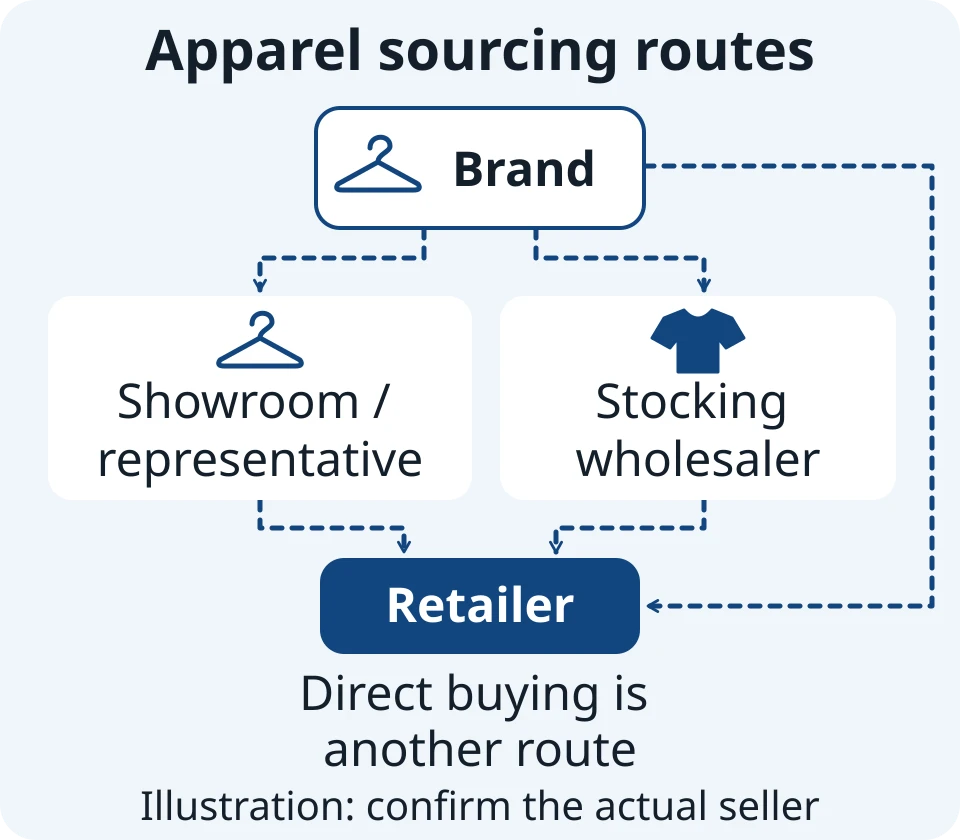
Illustration: possible sourcing relationships, not a required sequence. Confirm who sells and ships the particular order.
For U.S. retailers researching wholesale clothing vendors, start with the buying task: inspect a brand’s collection, obtain specified garments from a stocking seller, or discover sellers online. A brand, showroom, distributor and marketplace may participate in the same purchase without doing the same job. This guide maps those roles, separates current Los Angeles buyer guidance from Miami’s garment-district history, and provides a record for comparing apparel offers. It covers new clothing procurement rather than supplier rankings, startup budgets or secondhand bundles.
Input or item
Value or source
Why it matters
Apparel brief
Your category, style and intended sales channel
Sets the scope of the search
Seller identity
Order terms and proposed invoice
Identifies the business selling the goods
Style and size availability
Dated stock record or collection offer
Separates available garments from a catalog image
Delivery status
Written stock or production confirmation
Distinguishes replenishment from a future collection
Buyer access
Seller or showroom requirements
Determines whether a visit or account is usable
Return scenario
Applicable order policy
Separates unwanted stock from a delivery problem
Identify the seller behind the channel
A sourcing channel tells you how to find or contact a business; it does not necessarily tell you who owns the clothes. Separate discovery, representation and sale before evaluating an offer. The wholesalers by category hub explains why the product-specific questions belong alongside the shared account and supplier checks.
The American Apparel & Footwear Association describes a supply chain encompassing manufacturers, retailers, textile suppliers and other participants. That supports a view of apparel sourcing as connected roles, rather than a single kind of vendor. The Census Bureau’s wholesale definitions make the commercial distinction: merchant wholesalers trade on their own account, while agents and brokers arrange transactions for others.
Use the following table as a suggested research map. It does not assign every company with the same label an identical business model.
Route or role
What to establish
Record before comparing offers
Brand wholesale account
Whether the brand sells directly or refers you to a representative
Invoicing company, collection identifier and delivery offer
Showroom or sales representative
Whether it represents another seller or sells on its own account
Represented business, ordering contact and party confirming the order
Stocking wholesaler or distributor
Whether the business owns and can supply the specified garments
Seller identity, dated stock by style and size, dispatch arrangements
Apparel marketplace
What the platform handles and what the vendor handles
Vendor’s order terms alongside the platform’s buyer process
District or trade-market visit
Which individual businesses you can visit
Appointment, access documents and purpose of the meeting
A showroom meeting can help you examine a collection without establishing that finished goods are waiting nearby. Ask whether you are looking at available stock, a sample for a future delivery, or a product that still needs production confirmation. Record the answer against the style, rather than against the showroom’s name.
Similarly, a distributor’s U.S. contact address is not documentation of a garment’s manufacturing origin. Keep the seller’s location, dispatch location and product origin as separate questions. The domestic versus overseas supplier guide covers the wider sourcing consequences of that distinction.
For roles outside apparel, use the manufacturer, distributor and wholesaler comparison. Here, the practical output is simpler: write the name of the business that will confirm, invoice and fulfill the clothing order, and identify any other party’s separate role.
Takeaway: Compare the business selling the clothes, not just the name of the place where you discovered them.
Use location as a research lead, not a buying credential
Los Angeles has published buyer guidance for wholesale vendors, marts and contemporary showrooms. The Miami sources used here describe garment-district history and neighborhood redevelopment. Those are different kinds of evidence. Use each for the question it answers, then obtain current access and order information from the businesses you intend to contact.
Location
What the institutional source establishes
What to check separately
Los Angeles Fashion District
The BID’s Buyer Info describes wholesale and showroom access, business documents and appointments
Individual eligibility, collection availability and proposed visit
Miami’s Wynwood garment-district history
City planning material and the Wynwood BID describe the former garment economy and reuse of buildings
Current seller address, whether wholesale buying is offered and appointment arrangements
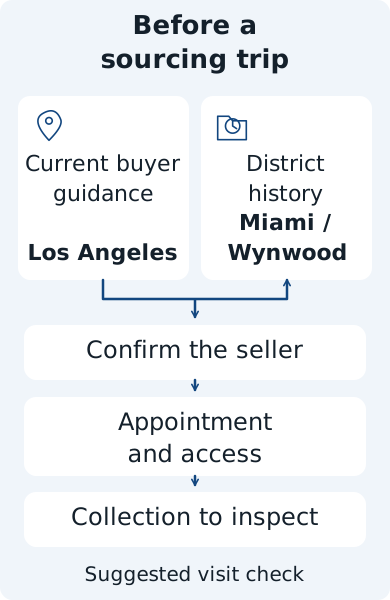
The LA Fashion District’s Buyer Info identifies business-license or seller-permit information, business tax identification and purchase invoices among its buyer-document requirements. It recommends contacting contemporary showrooms for appointments outside Market Weeks and says buyers attending Market Weeks register with individual showroom buildings. Confirm the relevant requirements before travelling; this is local buyer guidance, not a nationwide licensing rule.
Suggested visit check. A historical garment-district description does not establish current buyer access.
For Miami, the City of Miami planning archive describes Wynwood’s Garment District and the departure of clothing businesses. The Wynwood BID’s history explains the reuse of warehouses and factories for other purposes. Neither page supplies a current wholesale buyer-admission policy. They do not support treating every contemporary address marketed as a Miami fashion location as an operating wholesale destination.
This distinction changes trip planning. Start with a confirmed business and ask what you can actually do there: inspect garments, meet a representative, collect an agreed order or place an order for later delivery. Keep a screenshot or message of the confirmation with the business’s address and appointment details. For account preparation, use the wholesale account requirements guide.
Common mistake: Using a district’s reputation as proof that any nearby clothing business sells wholesale or accepts walk-in trade buyers.
Takeaway: A useful sourcing trip starts with confirmed appointments and an inspection purpose.
Translate a style brief into product evidence
Streetwear, trend-led, contemporary and designer are search descriptions, not enough evidence to compare garments. Turn your preferred look into questions about the actual item. The LA Fashion District’s online buying guidance distinguishes designer, contemporary and fast-fashion vendors, but those category labels do not establish a particular order’s fit, authenticity or availability.
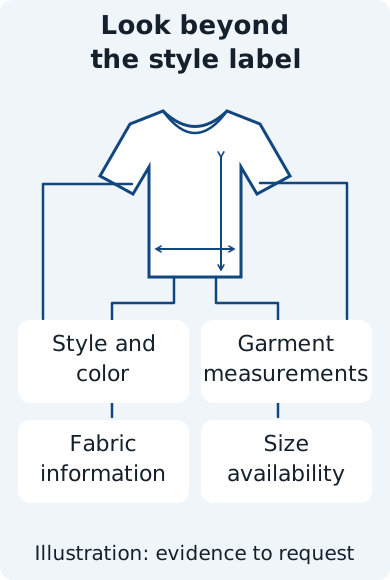
The table below is an editorial checklist for requesting evidence. It is not a quality grading system or a claim that a style belongs exclusively to one channel.
Your clothing brief
Evidence to request
Decision it helps you make
Streetwear or graphic-led garments
Close views of print placement, garment measurements and any branded design permissions
Whether the item matches the proposed listing and sourcing arrangement
Trend-led women’s apparel
Actual style and color references, size availability, stock versus future-delivery status
Whether the offered assortment matches the selling window
Contemporary or designer collection
Collection reference, order confirmation, sample details and selling-channel conditions
Whether the offer is for the intended collection and channel
Basics intended for repeat replenishment
Repeatable style identifier, measurements and confirmation of reorder availability
Whether a later order can be compared with the current one
Size-focused assortment
Garment measurements and the offered size mix
Whether the available pack suits the assortment you plan to carry
Illustration of evidence to request; the garment outline is not a supplier product or an inspected sample.
If a seller sends a collection catalog or line sheet, ask which edition applies and compare its style identifiers with the seller’s stock or delivery confirmation. An image of a collection answers a different question from a dated inventory record. The price-list versus stock-list guide explains how to keep those documents separate.
Faire’s published prepack definition describes a product sold in a predetermined size assortment. For an offer described as a prepack, ask for the quantities of each size and confirm the colors included in that grouped offering. Do not assume that photographs of several sizes mean you can select them individually. Ask whether the minimum applies to the complete order, a style, a color or the offered pack; use the MOQ guide for the broader minimum-order terminology.
Treat branded designs as an evidence question too. A logo in a catalog is not the supporting record you need. Follow the authorization versus ordinary wholesale distinction when a purchase depends on a specific brand relationship. Request written confirmation for your intended sales channel rather than inferring permission from the ability to open an account.
Takeaway: Specify the garment and assortment you want before using style language to narrow the channel.
Compare clothing websites at the order level
Compare apparel websites using the seller’s identity, the exact size assortment, delivery status and the remedy for a specific problem. Platform policies provide examples of why one site’s general return message cannot be transferred to another order. The examples below were checked against each platform’s own published material on October 8, 2026; they are not recommendations.
Published example
Apparel-relevant condition
Question to resolve before ordering
FASHIONGO Buyer Services Agreement
Describes a platform facilitating buyer-vendor transactions, rather than being their direct sales party
Which vendor is selling the garments and confirming the order?
FASHIONGO Wholesale return guidance
Distinguishes delivery problems from other reasons and directs buyers to the vendor policy attached to the order
What policy applies to this purchase, and how do you request an RMA?
Faire return policy
Covers qualifying orders, typically first orders with a brand, with stated exclusions; original outbound shipping is non-refundable
Does this order qualify, and are its garments or packs excluded?
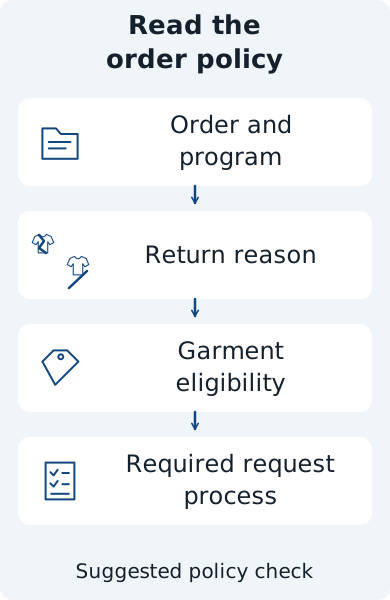
RMA means return merchandise authorization: the return-request record used in FASHIONGO’s published process. Its guidance describes vendor acceptance or rejection followed, where accepted, by return instructions and a refund. Read the order’s policy for your reason, including unwanted stock versus wrong, missing, damaged or defective items.
Faire’s policy excludes categories including customized products, samples, final-sale items, seasonal items and individual pieces from bundled sets. For apparel sold as an assortment, that last distinction matters: do not infer that one unwanted size can be separated from the rest of a bundle for return. The policy also requires eligible returns to meet condition, packaging and tag requirements. Check the complete policy and account-specific eligibility instead of treating these examples as a full return promise.
Suggested policy-reading sequence. The applicable platform and seller documents determine the remedy.
Common mistake: Treating a garment that did not sell as the same return scenario as a garment that arrived damaged.
Save the policy presented with the order, along with the size assortment and delivery description. If a platform offers separate wholesale and dropshipping programs, identify the program before reading its help page. This comparison uses FASHIONGO Wholesale guidance and does not extend it to its dropshipping service.
For payment routes, marketplace eligibility and broader responsibilities, continue with the online wholesale marketplace evaluation guide. This apparel page adds the garment-specific questions; it does not replace that wider comparison.
Takeaway: The useful comparison is between applicable order terms for the same garments and problem.
Build a comparable apparel order record
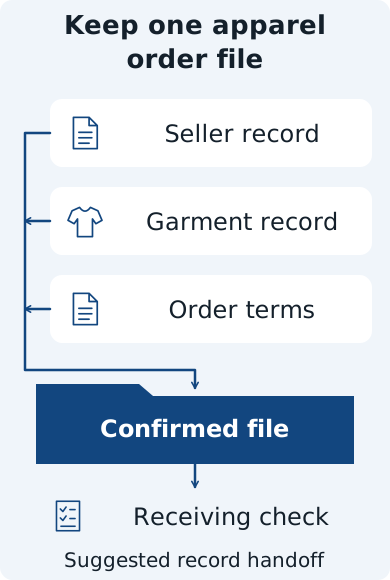
Write down what the candidate channel has actually confirmed before comparing it with another offer. Copy the blank record below for each candidate, filling the final column with a confirmed answer or an explicit open question. These are suggested purchasing fields, not prescribed supplier requirements. An unresolved cell is a question to send to the seller, not a value to fill from another vendor’s catalog.
Record field
What to capture
Where to look or ask
Your confirmed answer / open question
Seller and representative
Invoicing business and any showroom’s role
Seller confirmation and order terms
Goods
Style, color, size mix, fabric information and offered condition
Product record, sample details and stock confirmation
Availability
Confirmed stock or future delivery, including any unresolved styles
Dated seller response
Order basis
Pack or individual-unit basis and applicable minimum
Written offer
Sales arrangement
Intended store, website or marketplace and stated restrictions
Seller’s written conditions
Dispatch and receipt
Dispatch location, shipping arrangement and inspection plan
Order confirmation and receiving instructions
Return file
Applicable policy, excluded items, request process and relevant deadlines
Saved platform and vendor order records
Suggested record handoff. Keep the seller, garment and terms records attached to the same order.
Then resolve any mismatch in what you are comparing. If one offer is confirmed stock and another is a collection sample for later delivery, record them as different buying propositions. If one contains a fixed size mix and the other allows selection, record the assortments before comparing the totals. A different pack is not the same product input merely because the headline style looks similar.
Before dispatch, decide who will check the shipment against the recorded styles, colors, sizes and condition. Preserve labels and packaging while following the applicable inspection and claims process. The warehouse pickup and receiving guide helps assign that handoff. A useful channel decision ends with an order that another person can inspect against the same information you used to approve it.
Takeaway: Choose a channel once its order record answers your apparel task and exposes the remaining uncertainties.
When this does not apply
This guide covers discovery and comparison of new apparel supply channels. It does not establish used-clothing grades, a startup purchasing budget, profitability, legal resale rights or product compliance. Those decisions require their own evidence. No source here verifies the current inventory, authorization or service quality of an individual clothing vendor.
For used bundles, mixed-condition lots or closeouts, start with the general merchandise and closeout channel guide; do not transfer new-clothing sample expectations to an unspecified lot. A random used vintage clothing mix has its own checks in the mixed-bundle record.
For manufacturing a new label, use a manufacturing specification and production agreement. A ready-made wholesale listing does not settle that project.
For children’s apparel, protective clothing or other products with specific safety obligations, obtain product-specific regulatory advice and documentation before treating account access as sufficient.
For Miami travel, obtain current supplier-level information. The historical sources cited here cannot establish a present-day wholesale itinerary.
Takeaway: Use this channel map within its new-apparel scope, then obtain evidence for the particular product and transaction.
Method and sources
This is an AI-assisted public-source synthesis checked October 8, 2026. National Wholesalers has not purchased apparel through the channels described or tested suppliers. AAFA supports the apparel supply-chain scope; Census supports the commercial-role definitions. LA Fashion District materials supply local buyer and online-channel information. Miami city planning and Wynwood BID sources support historical context. FASHIONGO and Faire supply their own published transaction and return descriptions.
The tables and diagrams translate those materials into suggested buyer checks. They are editorial organization rather than an industry standard, a supplier audit or transaction evidence. Historical district pages cannot establish current merchant conditions. The older general online-shopping advice is not used to override either platform’s current return policy.
The linked source list below provides the primary documents. Read the applicable seller and platform policy again at the time of ordering, as eligibility for account terms, garment categories, and return reasons depends on the seller’s live contract. No price comparison, profit estimate, company ranking or first-hand purchase claim is included.
Takeaway: Use institutional sources for the questions they answer and current order documents for the conditions of your purchase.
Related reading
U.S. wholesale clothing vendors and apparel hubs guide — compare Los Angeles, New York City, Dallas, and Atlanta wholesale hubs, ASTM Missy versus Junior prepack ratios, RMA defect windows, and FTC/CPSC/Prop 65 compliance.
Choose against a specific order rather than a general ranking. Check whether the site identifies the seller, records the sizes and delivery status you need, and provides an applicable remedy for the problem you are concerned about. A large catalog does not establish those conditions.
Can I buy wholesale clothing without a license?
Ask the particular seller or showroom about buyer eligibility before arranging a visit or order. The LA Fashion District publishes business-document requirements for wholesale buyers. This guide does not establish a nationwide licensing rule or substitute for checking your jurisdiction's business and tax requirements.
What type of clothing is most profitable?
The sources used here do not establish a most-profitable clothing category. A style label is insufficient: a buyer would need their own sales, markdown, return, stock and delivery-cost records. Use the style-evidence checklist to identify what remains unknown before treating a category as a margin opportunity.
Where can I buy wholesale clothes to resell?
Explore brand wholesale accounts, stocking sellers, showrooms and apparel marketplaces. Before choosing one, disclose whether you will sell in a physical store, on your own website or through another marketplace, and request any applicable channel restrictions. Finding goods is separate from confirming the proposed resale arrangement.
Is FashionGo or faire better?
Compare the terms applying to your actual garments and return reason. FASHIONGO directs buyers to the vendor policy attached to the order; Faire's qualifying-order policy includes eligibility conditions and exclusions. Neither example establishes a winner for every apparel purchase, and this guide has no transaction-based performance comparison.
Which place is best for wholesale clothes?
Plan travel around confirmed appointments and goods you can inspect. If the seller cannot confirm access, the relevant collection and your buying status, a district's reputation alone does not justify the trip. Request current information first; historical garment-district descriptions do not establish today's buying arrangements.
Compare U.S. wholesale clothing vendors in LA, NYC, Dallas, and Atlanta against B2B websites and overseas factories across sizing, RMAs, and FTC/CPSC rules.